ArticleOpen Access
Mineralization of North China groundwater constrains the reproducibility of Pilsner style
Setting Jinan spring water beside the Plzeň aquifer shows that “style” is first a water-chemistry recipe.
Jiashu Shen1†, Pavel Novák2, Qinghe Lü1,3
* Equal contribution · † Corresponding author
B.E.E.R. 647, 244–251 (2026)
Abstract
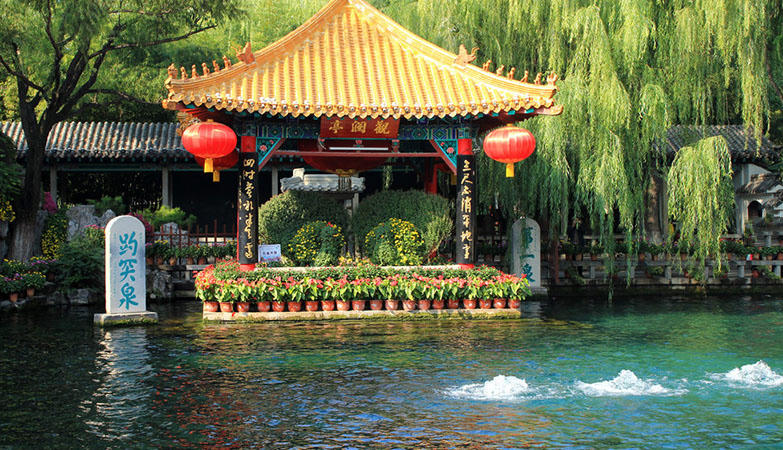
Pilsner is widely treated as a “recipe style”, yet the original samples depended on extremely soft, low-sulphate sandstone water from the Plzeň region. We analysed major ions from Baotu, Black Tiger and Pearl springs in Jinan and from 11 deep North China wells, and brewed 48 batches of 12 °P lager on a unified malt–hop matrix. When sulphate exceeded 80 mg L⁻¹ or residual alkalinity rose above 1.2 mEq L⁻¹, a trained sensory panel could no longer call the beer a Pilsner. The low mineralization of the Baotu Spring cluster makes it one of the few East Asian sources that can approach the original style without water adjustment. The study pulls a geographical-indication argument from marketing language back to a measurable water-chemistry threshold.
Subject: Water chemistry
Style guidelines rarely write water into the definition, yet the birth of nineteenth-century Pilsner was almost a hydrological event: a sandstone aquifer delivered near-distilled sulphate and residual alkalinity1. Jinan styles itself the City of Springs; TDS in the Baotu cluster sits year-round below 400 mg L⁻¹, with a calcium-to-magnesium ratio close to Plzeň2.
In double-blind triangle tests, batches brewed on Black Tiger and Baotu spring water were scored “clean and drinkable”, whereas the same recipe on deep-well water from Dezhou and Binzhou showed a clear sulphate astringency. The threshold matches the residual-alkalinity model3.
Methods
- Ion chromatography for Cl⁻, SO₄²⁻ and NO₃⁻; ICP-OES for Ca, Mg, Na and K.
- Unified Bojan Pilsner malt and Saaz hops, 12.0 °P, fermented at 10 °C.
- Sensory evaluation by 12 BJCP-certified judges following DIN 10952.
Data availability. The full water-chemistry table is in Supplementary Data 1.
Acknowledgements. The Jinan Municipal Bureau of Water Affairs assisted with sampling.
Author contributions. S.J.S. designed the study; P.N. supplied Plzeň control water; L.Q.H. carried out the brewing.
Competing interests. The authors declare no competing interests.
Authors and affiliations
- 1. School of Water Conservancy and Environment, University of Jinan, Jinan, China
- 2. Research Institute of Brewing and Malting, Prague, Czechia
- 3. Sino-German Beer Technology Centre, Qilu University of Technology (Shandong Academy of Sciences), Jinan, China
Corresponding author: Jiashu Shen (jshen@ujn.edu.cn)
References
- 1. Briggs, D. E. et al. Brewing: Science and Practice (Woodhead, 2004).
- 2. Wang, Y. et al. Hydrochemical characteristics of karst water in the Jinan spring catchment. Hydrogeol. Eng. Geol. 46, 1–10 (2019).
- 3. Kolbach, P. Einfluss des Brauwassers auf den pH. Monatsschr. Brau. 6, 77–80 (1953).
- 4. Eumann, M. & Schildbach, S. Water in brewing. J. Inst. Brew. 118, 2–9 (2012).